We Have a System. Nobody Knows Where It Is.
Things are getting missed. The wrong version of something went out again. You keep meaning to sit down and sort it all out. Next week, for sure. (It’s been next week for a while.)
If that sounds familiar, your business is running you instead of you running it. Most leaders I talk to in this spot are stressed and worn thin. Many of them think the answer is more: more people, more hours, a better hire. They just can’t find anybody good.
Often the people aren’t the problem. Nobody knows what to do, because nothing is organized and there’s no system. Good people get frustrated and leave, and the search starts over.
Everybody already has a process
Every organization has a way of getting things done. Whether it’s written down is another story.
When I come in, the first thing I want to hear is the problems. Tell me what’s going wrong. That’s usually where I can see the disconnect. Sometimes there’s no process at all. Sometimes there is one, but it’s done differently each time. Sometimes it’s several people’s job, so nobody is sure how it should be done, who to tell or where it needs to go.
None of that means people aren’t trying. It means the pieces aren’t connected.
Why systems go unused
Sometimes there is a system. Someone took the time to write everything down: how to do each task, where the files live, the logins, all of it. Then nobody uses it.
There are a lot of reasons that happens, and usually it’s more than one:
It was built for the person who made it, not the people who have to use it.
The old way is faster.
Nobody owns it.
Nobody was shown how to use it.
It doesn’t match how people actually work day to day.
Leadership isn’t using it either.
A system only works if it makes things easier and someone makes sure it gets used. Otherwise it’s a very nice document that nobody has opened since the day it was made.
When I ran my design studio, it ran on a system I built. What made it work wasn’t the system itself. It was that I followed it every time.
Don’t start with the tool
When things feel chaotic, it’s tempting to buy new software and ask everyone to switch. I wouldn’t walk into an organization and tell them to start using something like ClickUp on day one. Handing a stressed team a big new platform is like tossing them in the deep end without a floaty and asking them not to drown. Start in the shallow end. You might graduate to a bigger tool later, once you know exactly what you need it to do.
The process comes first. The tool comes after.
Someone has to be ready
The systems that stick have someone behind them who wants them to work. Or someone who is tired enough of everybody doing their own thing to finally make a change.
If that’s you, here’s where I’d start.
What to do first
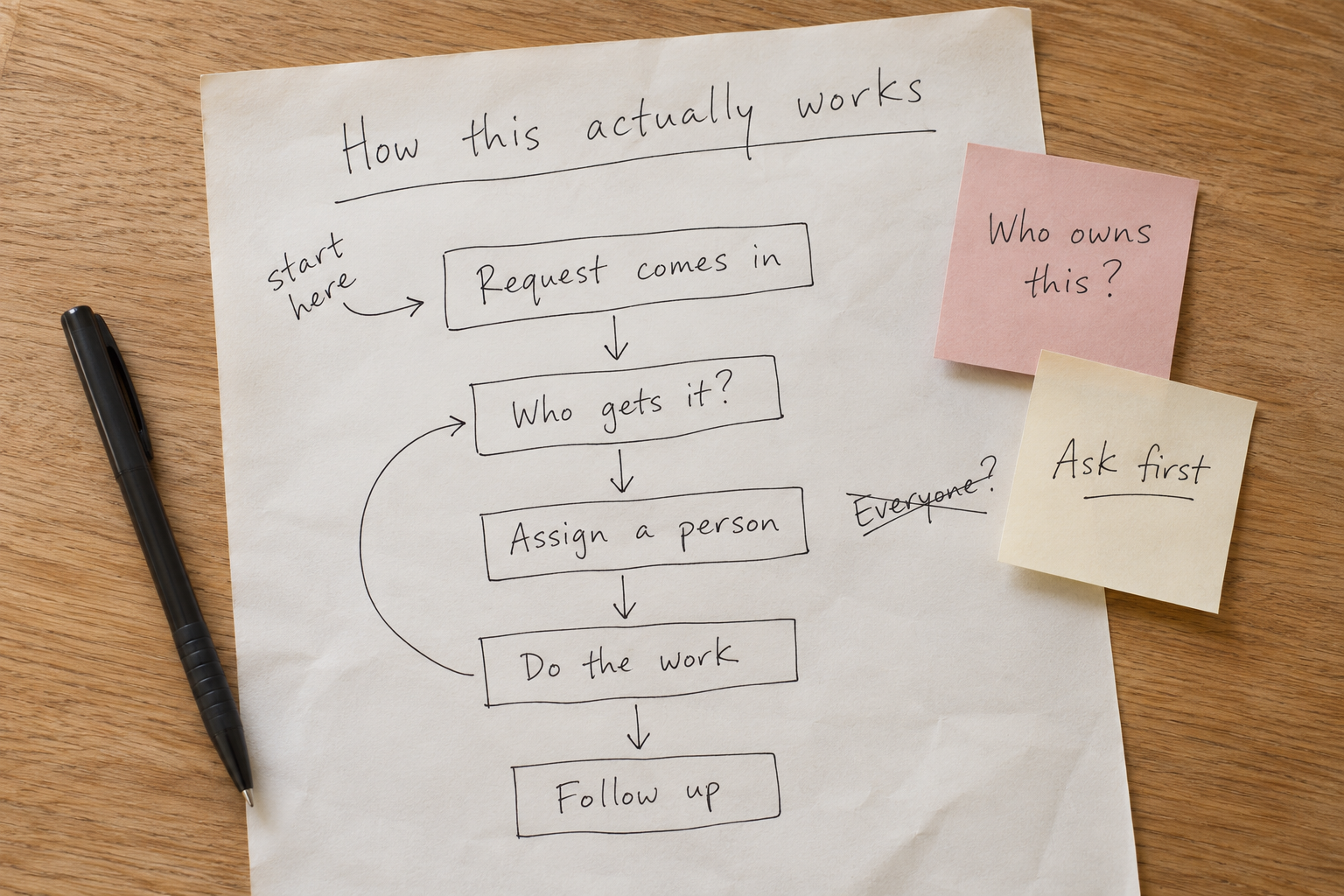
1. Write down your process, messy version first. Paper is fine. Don’t clean it up. Write what actually happens, not what’s supposed to happen.
2. Start with what breaks most often. Fix your biggest headache first. You’ll feel the difference right away.
3. Name who owns it. One person, and make it very clear.
4. Ask the people doing the work. They do it every day, so they know it best and they know the frustrations. Asking them makes them feel heard, and they’ll often give you ideas you hadn’t thought of.
Then build only what you need to fix what you found.
One thing you can do this week
Pick the last thing that got missed. Write down, step by step, how it’s supposed to happen and who does each part. Wherever you get stuck or aren’t sure, that’s your disconnect.
That’s where I start too. The answer is usually somewhere in the messy version. If you’d like a second set of eyes on yours, I’d love to hear what’s going on.