“Write this email better.”
“Make me a caption.”
“Make it sound like me.”
(It didn’t.)
If that’s how you’re using AI right now, you’re not alone. Most people I talk to are right here. And honestly, using AI for messaging isn’t a bad thing. The problem is throwing something in, taking whatever comes out and posting it.
That’s how you get generic. And people can tell. You read it and think, boy, that doesn’t sound like you. Then everybody’s posts start to sound the same.
AI makes you more of who you already are
Here’s what I believe about AI. It expands the person using it.
If someone’s looking to do less, AI will help them do less. If someone is driven, they’ll get more done, faster, than they ever could before.
But either way, it doesn’t replace your judgment. If you lose that, you’ve lost the most important part.
Why it sounds generic
For AI to be great, it needs information. You have to feed it.
If it doesn’t know your people, your brand, your voice or what you’re trying to do, it’s going to fill in the blanks with something that sounds like everybody. You can’t just say “take this” and expect it to know. You have to put some work in behind it.
That’s the same lesson as every other part of communication: you have to know who you’re talking to. If you don’t, AI will happily write something for you. It just won’t be for anyone in particular.
It never gets it right the first time
I use AI for campaigns all the time. I’ll tell you, it has never handed me a campaign that was right on the first try. Not once.
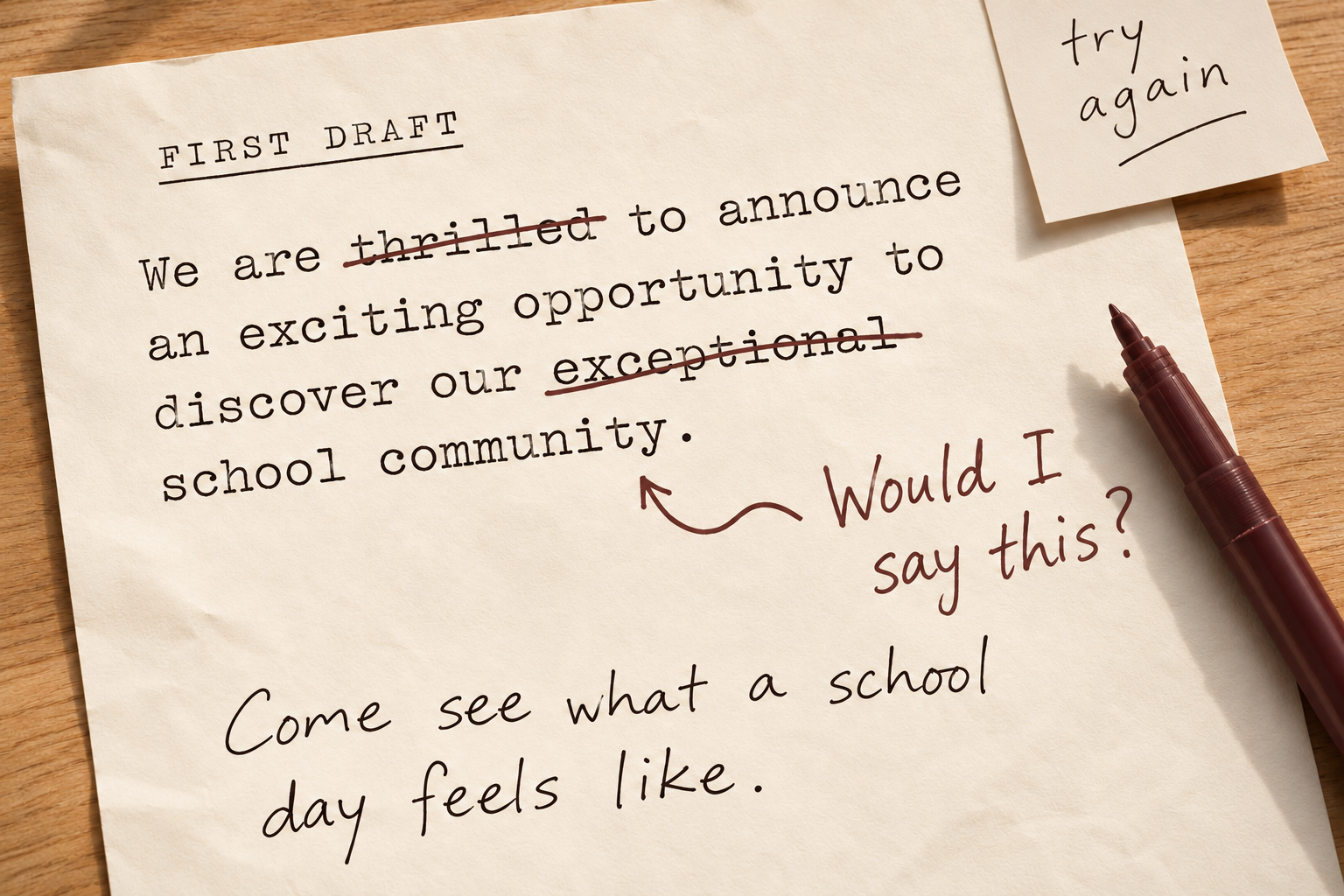
I rework it. Then I rework it again. And again. I keep going until it sounds like the people I’m talking to and says what they actually need to hear. That part is my job, not the AI’s.
So if your first draft sounds off, that’s normal. The mistake is stopping there.
What it can do when you go past captions
Most people stop at “write this better.” That’s barely scratching the surface.
Here’s one way I use it. For enrollment tours, every tour’s information flows into a spreadsheet automatically: who they are, how they heard about the school, and more. AI compares this year to last year and keeps track of whether we’re ahead or behind. I look at it once and know where we stand. Who has time to enter all of that by hand?
That’s the point. AI does the work behind the scenes so I can do what I do best, which is the judgment part.
And it moves fast. I have a weekly reminder to check what’s new, and honestly, that’s probably not enough.
Ask it what you don’t know
The most underused question in AI is this one:
“What am I not thinking about?”
When I’m starting something new, I don’t just ask AI to write. I ask it questions. Here’s what I’m trying to do. Here’s what I already know. What questions should I even be asking? What am I missing?
Most people don’t know what to ask, so they never find out what it can do. Ask it.
What to do first
1. Know your audience before you open AI. Who is this for, and what do they need to hear?
2. Feed it. Tell it about your people, your voice and your goal. The more it knows, the less generic it sounds.
3. Ask before you assign. Start with “What am I missing?” instead of “Write me a post.”
4. Rework it until it sounds like you. Read it out loud. If it doesn’t sound like something you’d say, keep going.
5. Let it work behind the scenes. Find one repeat task you do by hand and see if AI can take it off your plate.
One thing you can do this week
Before your next post, open your AI and type: “Here’s what I’m working on and who it’s for. What am I not thinking about?” Then read what it gives you before you ask it to write a single word.
AI can do so much. But it’s only as good as what you bring to it, and what you bring is your judgment. If you’d like help putting AI to work behind the scenes in your organization, I’d love to hear what’s going on.