
The Harder Way — Why Creative Business Owners Keep Overcomplicating Operations (And What To Do Instead)
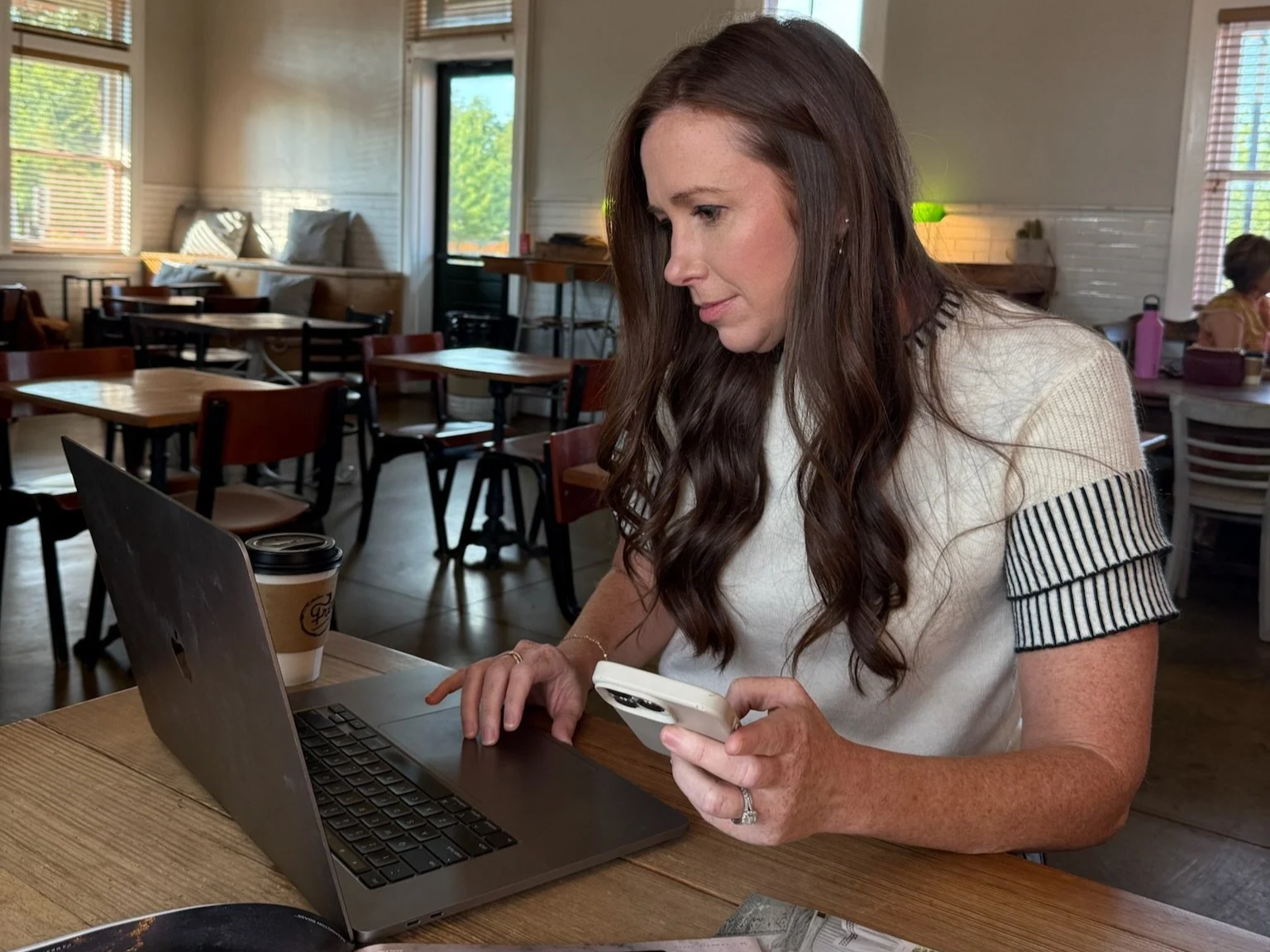
Ashley Denbow is a systems strategist for creative businesses. She builds AI-powered systems that handle the operational weight — so the part of you that actually does the work has room to breathe again. She built the AI operating system for her own interior design business before offering it to anyone else — and used the same approach to help a private school go from 4 tours to 90+ in one year, increase retention from 50% to 80%, and enroll 30+ more students than the previous year. The Creative Edge is her done-for-you AI systems build for creative businesses.
There's a rule I use for every operational decision in my business.
If it's the harder way — reevaluate.
The solution isn't learning to work harder or smarter alone. It's AI-powered systems built specifically for your business — done for you, handed over working, so you can stop compensating with effort for what a system should be doing automatically.
Not because hard things aren't worth doing. Some of the most important things are hard. But in operations — in the systems and processes that run a business day to day — hard is usually a signal. It means something wasn't designed. It means someone is compensating with effort for what a system should be doing automatically.
Most creative business owners are doing it the harder way. Not because they chose to. Because they never saw another option. Because they started with talent, built revenue on effort, and somewhere along the way accepted that this is just what running a business feels like.
It doesn't have to feel like this.
What The Harder Way Actually Looks Like
It looks like writing the same email for the fourth time this month because you never built the template.
It looks like a content calendar that gets abandoned every time a project gets busy — and then starting over from scratch when things slow down.
It looks like proposals written from memory because the last version is buried in a folder somewhere with a name you can't remember.
It looks like checking the bank account to figure out how the business is doing financially — instead of having a system that tells you.
It looks like making decisions alone. Turning the same question over for days. Asking someone who means well but doesn't know your business.
It looks like being excellent at the work and exhausted by everything around it.
None of that is a personal failure. It's a systems failure. Different problem. Different solution.
Why Creative Business Owners Stay On The Harder Way
Three reasons. All of them make sense. None of them hold up.
Reason 1 — "I don't have time to build systems." This is the most common one. And it's true in the moment — when you're in the middle of a project, the last thing you want to do is stop and document a process. But the time you spend not having the system costs more than the time it would take to build it. Every proposal written from scratch. Every email recreated. Every month of financial guesswork. The time is being spent either way — just on the wrong side of the problem.
Reason 2 — "I've tried systems and they don't stick." Usually this means the system was too complicated, too manual, or built for someone else's business. A system that requires you to remember to update it isn't a system. It's a reminder with extra steps. The systems that stick are the ones that run whether or not you're paying attention to them. That's what AI makes possible — systems that don't require your constant maintenance to function.
Reason 3 — "I'm not a tech person." Neither was I. I built an AI-powered operating system for my design business with no technical background and no roadmap. I figured it out because I needed it. What I know now — and what I wish someone had told me earlier — is that the tools available today don't require a technical background. They require clarity about what you need and someone who knows how to configure them. That's a different thing entirely. If that's the reason you've been holding back — The Creative Edit starts there. A full audit of your business, your three biggest gaps named, a specific build list delivered in under a week. Start here.
“AI doesn’t replace creativity. It clears the path back to it.”
What The Smarter Way Looks Like
It looks like a proposal that generates itself from your discovery call notes — in your voice, personalized to the client, ready to send in the time it used to take to open a blank document.
It looks like a content calendar that researches what your ideal client is thinking about, plans the month, and writes the captions — so visibility doesn't stop when a project gets busy.
It looks like client communication that goes out on time whether or not you remembered to send it.
It looks like a monthly financial snapshot that tells you where you stand — revenue, outstanding invoices, on track or not — in 10 minutes without doing the math yourself.
It looks like bringing a hard decision to a configured board of advisors — eight expert frameworks available at any hour — instead of turning it over alone at 11pm.
It looks like being excellent at the work and having the space to actually do it.
That's not a fantasy. That's what a functioning system produces. And it's available to a solo creative business owner running on a $20/month Claude subscription and a handful of tools you probably already have.
The AI Replacement Fear Is The Wrong Fear
I want to address this directly because it comes up every time.
The fear isn't wrong — it's misdirected.
AI is changing things. It's changing what's possible, what's expected, and what's competitive. That's real. But the version of AI that replaces creative people — the version that makes designers, photographers, architects, copywriters irrelevant — that's not what's actually happening when you build systems correctly.
What's actually happening: the operational weight is moving off your plate. The emails. The proposals. The scheduling. The content that has nothing to do with the creative work itself. That weight moves to a system. And what's left — the judgment, the taste, the vision, the relationship, the thing that only you can do — has room again.
AI doesn't replace creativity. It clears the path back to it.
The creative businesses that figure this out now won't just be more efficient. They'll be more creative — because they're spending their best hours on the work that actually requires them.
That's the whole point.
The Question Worth Asking
Most creative business owners know something is wrong. They can feel it — the exhaustion that doesn't match the success, the gap between how good the work is and how hard the business feels to run.
The question isn't whether the systems are broken. They usually are.
The question is: are you ready to stop doing it the harder way?
Not to learn another tool. Not to take another course. Not to spend six months figuring it out yourself.
To have it built. Working. Handed over. So you can get back to the work that only you can do.
If that's where you are — that's exactly what I'm here for.
Get the Free Blueprint → Book a Discovery Call →
Frequently Asked Questions
What does "doing it the harder way" actually mean? It means compensating with effort for what a system should be doing automatically. Writing the same email for the fourth time. Rebuilding the content calendar from scratch every month. Making financial decisions based on a bank balance instead of real data. It's not a character flaw — it's what happens when a business grows faster than the systems supporting it. The fix isn't working harder. It's building what's missing.
How do I know if my systems are actually broken? If the business stops or slows significantly every time you step away from it — the systems are broken. If you're doing the same task manually more than twice a week — the systems are broken. If you feel more exhausted than the revenue justifies — the systems are broken. None of that is permanent. It's fixable.
Is AI actually practical for a solo creative business owner? Yes. The tools available now — Claude, Zapier, ClickUp, Kit, Dubsado, Canva — are built to be used by non-technical people. The barrier isn't capability. It's configuration. Knowing what to build, how to connect it, and how to make it run in your specific business. That's the work I do.
What if I've tried to fix this before and it didn't stick? It didn't stick because it was too manual, too complicated, or built generically instead of for your actual business. A system that requires you to remember to maintain it isn't working. The systems I build run whether or not you're paying attention to them. That's the difference.
Why does this feel harder than it should? Because you're talented and you've been compensating for missing systems with effort and capability for so long that it feels normal. It isn't normal. It's the harder way. And you don't have to stay on it.
Ashley Denbow is a systems strategist for creative businesses. She builds AI-powered systems that handle the operational weight — so the part of you that actually does the work has room to breathe again. AshleyDenbow.com